
Most weeks during the year, The Beech Hill School publishes
The Update
, a collection of news, updates, highlights and more. For over five years,
The Update
has been providing families all they need, and more, to stay up-to date with all that is going on at BHS. Head of School, Rick Johnson,regularly shares his thoughts in a segment of The Update called “From the Head’s Desk.” Since August of 2022, Rick has collected those writings here as well – enjoy!

The Bedrock Beneath the Foundation
On Fridays, the students humor me by letting me expound on topics of my choice during Community. Faculty have jokingly referred to this as “Rick’s Soapbox.” This week, I shared some thoughts about the importance of embracing the growth mindset. Most credit Carol Dweck with the popularization of this concept, which ultimately is predicated on the idea that one’s traits are not fixed. In other words, despite having different innate strengths and weaknesses, all individuals are capable of improving themselves.
As we finish up the opening weeks of the school year, it is important to remind ourselves of this notion, as students will start to experience struggles for the first time. Perhaps a test won’t go as anticipated, or a new acquaintance may do something that frustrates, it is important not to ascribe labels. The individual that struggled on the test is not “dumb”, nor is the frustrating individual a “jerk.” Each is capable of change. By keeping our minds open to the possibility of change and growth, we can see the best in ourselves and others.
At BHS, we can see the direct connection of the growth mindset to principles set forth in the Foundations of Community. One of our core ideas in the Foundations is Aspiration, and in that principle, it is agreed that “we understand that it is always possible to improve our communities and ourselves.” Thus, a growth mindset is actually the bedrock upon which our Foundation is built.
In the most practical of ways, a community that embraces a growth mindset is one that is generally positive and hopeful. This optimism is just one more reason why students at The Beech Hill School thrive.

An Enduring Response
This past Monday marked twenty-two years since the tragedies that occurred on September 11, 2001. For most of our faculty, the events of that day are seared in our memories, but for our students, it is simply a part of history. During Community on Monday, I let our students know of the school’s unique connection to 9/11 and the enduring message of good over evil that The Beech Hill School represents.
On that fateful day, BHS Founder, Emily Ricard was working in finance in the World Trade Center Complex in New York City. Fortunately, Emily was not physically harmed, but following that day, Emily was so impacted that she made a major life-change, leaving finance to become a teacher. This decision led to a chain of events that eventually culminated in the founding of The Beech Hill School.
When I shared the story of 9/11 with our students on Monday, I also shared Emily’s story. On 9/11 so much harm was inflicted on so many, but when one connects the dots, it is easy to see that the very existence of The Beech Hill School is an enduring response to the hate that fueled the perpetrators of 9/11. Every day, our students are taught to respect one another, to think critically, and to value their freedoms – so that eventually they will become “intellectually curious and capable young adults who will become contributing citizens and informed decision-makers.”
Twenty-two years later, The Beech Hill School is just weeks into its twelfth year. There is no way that Emily could have realized the enduring, and growing impact she made when the events of 9/11 inspired her to leave finance for education. As I told the students on Monday – we will never forget 9/11, nor will we ever forget The Beech Hill School’s special connection to it. Most of all, we continue to celebrate The Beech Hill School as an example of the power of good to prevail over evil.
Setting the Foundation
Unlike many, I got a very late start on the homeownership thing. For many years, I either worked in boarding schools, where housing was provided as part of the compensation package or in apartments. As such, when things would inevitably break or wear down, I was trained to contact the maintenance staff. Meanwhile, many of my friends had ventured into homeownership, and they learned how to care for and maintain their homes. Eventually, I became a homeowner, and while I do my best, I am not very skilled when it comes to home maintenance and construction in general. I do, however, understand a basic concept of structural integrity and strength. The foundation is critical in creating a sturdy structure, or as outlaw country musician David Allen Coe put it, “it’s not the beauty of the building you should look at; it’s the construction of the foundation that will stand the test of time.”
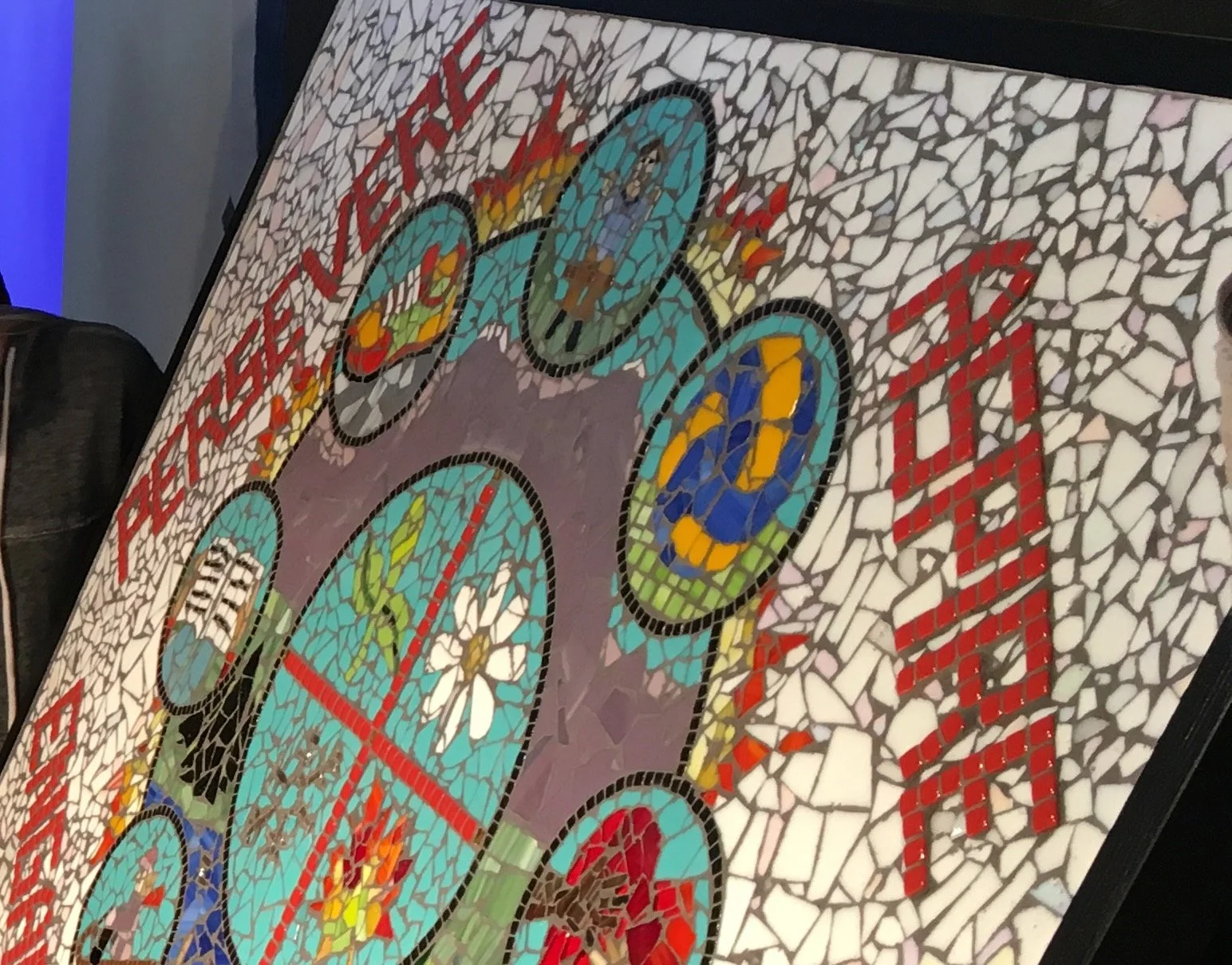
As we started this school year, we have spent significant time as a community discussing The Beech Hill School’s Foundations of Community. The Foundations were created not long after the school was founded and serve as both the footing upon which our community functions and the blueprint which guides it forward. Aspiration, Engagement, Perseverance, and Respect are the four principle ideas of The Foundations of Community , and throughout the week, new and old students, alike, examined the philosophical and practical ways that these ideas are the bedrock of our school.
As it was the first week of school, we intentionally spent extra time as a community discussing The Foundations. Throughout the year, we will continue to help the students see the many ways in which The Foundations of Community impact our lives at BHS. After a week of intentional work with The Foundations, I think it is safe to say that our community is very well grounded and ready to build!
Making BHS "Work"
Tomorrow, we will celebrate Labor Day. In the late 1800s, Americans came to understand the value of workers to the larger society. Over a century later, we continue to mark the end of the summer with a federal holiday designated to honor and celebrate the workers that make our country “work.” As I have shared in the past, my father, now retired, was the president of a large local of the American Postal Workers Union. So, labor was always honored and recognized in my house as I grew up.
As we celebrate Labor Day, I would like to extend my gratitude to all the individuals that work or have worked at The Beech Hill School. We are successfully starting our twelfth year at BHS because of the many contributions, great and small, of the folks that work and have worked here, in the classroom and beyond it.
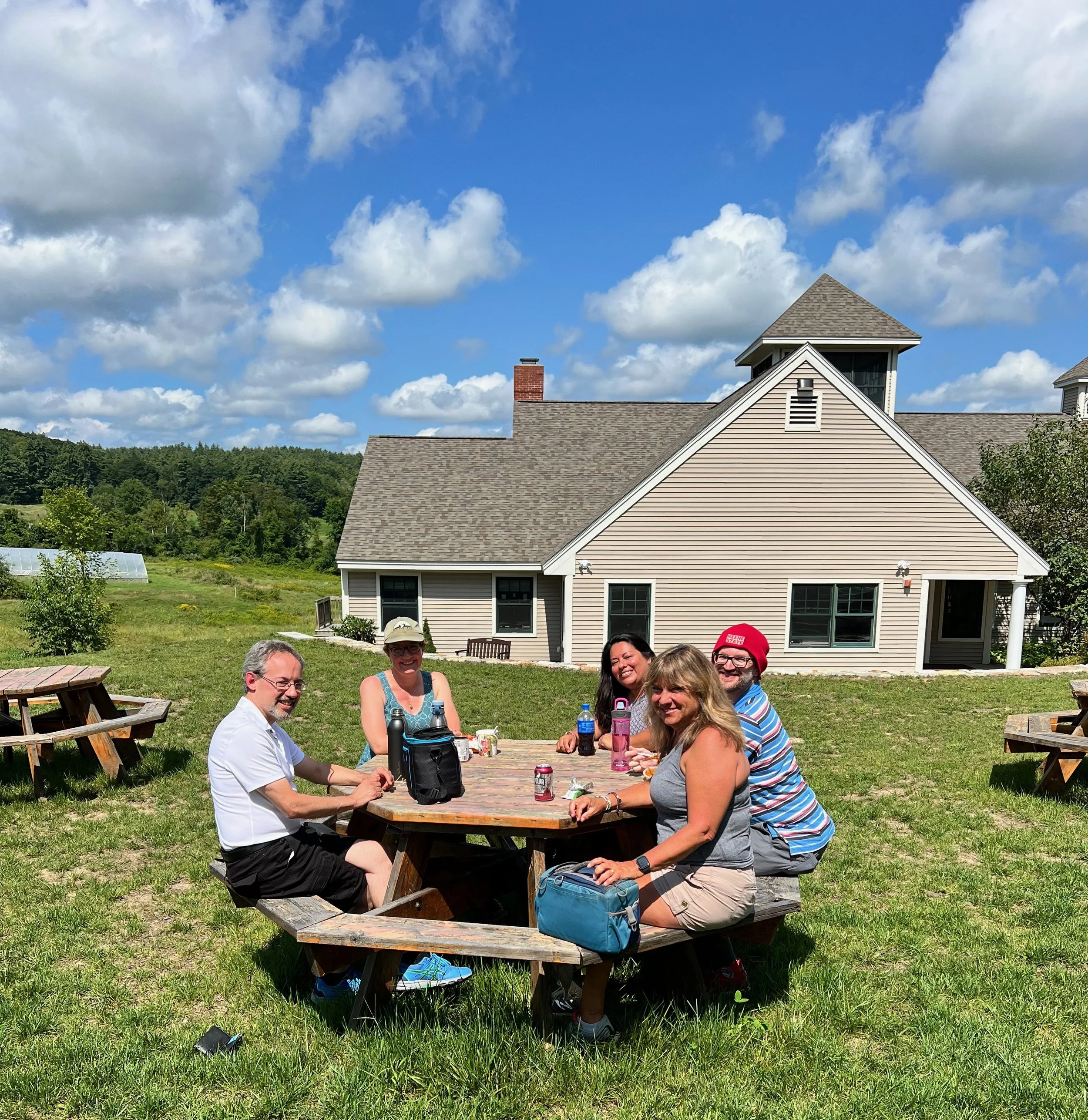
On Monday and Tuesday of this past week, our current faculty spent hours formally preparing for the coming year. The degree of professionalism, positivity, and engagement was truly remarkable. I have worked at several schools and have watched faculty dismiss the value of pre-sessional meetings. This was not the case for this year’s faculty at BHS. With these meetings fresh in my mind, I am so grateful for the many contributions of the faculty and staff that make BHS “work”.
Thank you to all the current and former BHS faculty and staff - Happy Labor Day to all!

Building Communication Skills
Both of my children are approaching pivotal points in their lives, as they are taking their own pathways down the college search process. Along the way, each have had to communicate in writing and verbally through their processes. In fact, just this week, while touring a college with a group of prospective families, the mother of another child made a comment to me about how impressed she was with the way that my children confidently communicated throughout the tour. I was grateful that she noticed, however, I am not sharing this as a brag on my children. I am quite proud of them, but it is very clear to me that they both gained their confidence and their ability to communicate in their time at The Beech Hill School.
At The Beech Hill School, students are required to communicate with their teachers, formally and informally, regularly. They email their teachers when they have questions, they engage in daily conversations with their advisees, and they learn explicitly in Skills Class how to write thank you notes, to interview, and so much more.
Often, people outside The Beech Hill School community assume that attending such a small school would shelter our students and stunt their ability to function in larger settings. What I have witnessed in my children, and what I have learned from our alumni is quite the opposite. Rather, the small school community requires that all our students develop their voice, because at BHS there are no places to hide. By the time a student departs, they have had a number of opportunities to develop their confidence through authentic practice.
While it has been a few years since my children graduated from BHS, I am so pleased to see that their experiences in our little school by the farm have helped them to develop into the young adults that they are today.